How Domestic Violence Impacts Children--Breaking the Cycle with Tricia Gray I Ep. 121
Kids don't have to be physically abused to be deeply affected by domestic violence. When children grow up surrounded by fear, conflict, manipulation, or emotional instability, the trauma often follows them long into adulthood. In this episode of the 1 in 3 Podcast, Ingrid sits down with executive leader, advocate, and author Tricia Gray to explore the lasting impact domestic violence has on children. Drawing from both professional insight and personal experience, Tricia explains how childhood...


Kids don't have to be physically abused to be deeply affected by domestic violence. When children grow up surrounded by fear, conflict, manipulation, or emotional instability, the trauma often follows them long into adulthood.
In this episode of the 1 in 3 Podcast, Ingrid sits down with executive leader, advocate, and author Tricia Gray to explore the lasting impact domestic violence has on children. Drawing from both professional insight and personal experience, Tricia explains how childhood trauma can shape identity, relationships, emotional regulation, and self-worth for years to come.
Together, they discuss:
✔️ How children experience domestic violence even when they aren't the direct target
✔️ Signs of childhood trauma, including hypervigilance, perfectionism, people-pleasing, and emotional shutdown
✔️ Why "staying for the kids" can create confusion, resentment, and long-term emotional wounds
✔️ The survival roles children adopt in abusive homes and how those roles follow them into adulthood
✔️ What healing looks like for children exposed to domestic violence
✔️ The conversations parents should have after leaving an abusive relationship
✔️ How accountability, validation, and honest communication help break generational cycles of abuse
Tricia also shares the inspiration behind her memoir, A Lotus Legacy, which tells the story of domestic violence through the eyes of a child and offers readers a deeper understanding of the lifelong effects of childhood trauma.
If you're interested in trauma-informed parenting, childhood trauma recovery, child advocacy, domestic violence awareness, or breaking the cycle of abuse, this episode offers valuable insight and hope.
🎙 Subscribe to the 1 in 3 Podcast, leave a review, and share this episode to help raise awareness about the often-overlooked impact domestic violence has on children.
1 in 3 is intended for mature audiences. Episodes contain explicit content and may be triggering to some.
If you are in the United States and need help right now, call the national domestic violence hotline at 800-799-7233 or text the word “start” to 88788.
Contact 1 in 3:
- Send your emails to 1in3podcast@gmail.com
- Follow on Facebook, Instagram, and TikTok @1in3podcast
- Check out the website https://www.1in3podcast.com/
Thank you for listening!
Cover art by Laura Swift Dahlke
Music by Tim Crowe
00:00 - Meet Trisha Gray And Her Story
03:53 - Success Without Healing Feels Off
07:00 - Breaking The Cycle Needs Child Advocacy
14:10 - Early Trauma Memories And The Body
20:48 - Finding Purpose After Public Murder
29:36 - Anger, Accountability, And Choosing Peace
36:16 - The Roles Kids Take To Survive
41:28 - Staying For The Kids Can Harm
52:18 - Talk, Apologize, And Validate The Child
58:17 - Proactive Prevention And Generational Change
01:03:27 - Book Release Details And Where To Follow
01:04:59 - A Child’s Words To Their Parent
Meet Trisha Gray And Her Story
SPEAKER_01
Hi, Trisha. Welcome to one and three and thank you so much for joining me today.
SPEAKER_00
Hi, thank you, Ingrid, and thank you for having me.
SPEAKER_01
I am very excited about this episode because this is yet another point of view that I haven't really explored on this podcast. But before we get into all of that discussion, could you give a bit of a background on yourself, please?
SPEAKER_00
Absolutely. So I'm Trisha Gray, and I by day I serve in many roles. I am an executive woman. I have my own business. I've started my own business at its partners, and I am degreed. I am a governing board president for a professional association called Women in Health Administration of Southern California. So I've got a lot of things going on professionally, personally. I'm a mother of four. I live in Southern California. I'm a native of Louisiana. So I've I kind of navigated from Louisiana to Texas to Arizona. And then I planted my heels in California, specifically in Southern California.
SPEAKER_01
Okay, this is totally off topic, but my sister just she lives in Texas or actually just about to move up over to Tennessee. But we, my oldest son is obsessed with Budin. And you said Louisiana, and I was like, oh my goodness, she's gonna know all about it. We tried to make it funny. We tried to make, and he likes the calachis. So we try to make boudin colachis at home. And it had I have a neighbor down the street that's also from Louisiana, and she's like, You can't make boudin. There's no way you're going to make it to taste like it's supposed to taste. I'm like, Oh, yes, I will. No, not even. There is absolutely no flavor to what we what we're art to making it.
SPEAKER_00
There's development art to making it. You have to be experienced.
SPEAKER_01
Yeah, it was so the calachi part, I guess the uh the pastry or the dough part that tasted good, but the the boudin had no flavor whatsoever. We tried it twice. We added, oh gosh, we I don't even know. We try to add so many spices to it, and it still it was just it tasted like watered down spices. It was really terrible. Wow. Yeah. So anyway, anyway. Um, and you can't buy it here. That's the other thing. My sister, she's moving actually this week. So I might I'll probably push her over the edge because she has a lot going on to make this move, but I kind of want her to pick some up and bring it up.
SPEAKER_00
Oh my gosh.
SPEAKER_01
That's that is so funny. Okay, so that's you have an incredible resume. And but so how did you get how did you get here?
SPEAKER_00
Oh yeah, yeah. So how did I get here? I, as I've said before, I my journey professionally was easy for me. I come from a background, poverty, domestic violence, a lot of unhealthy circumstances, if you will. And so in my attempt to rewrite my story, I thought my story
Success Without Healing Feels Off
SPEAKER_00
was all about changing my situation financially. So get a degree, and then get a second degree, and then do all the things. And that I thought would magically cure any other issues or challenges I may have had personally. So, fast forward, where I am now is okay, I've done all the work professionally, I've accomplished all the things I've set out to accomplish, but there still was something that was off. And it was because I had not addressed the things that I had gone through personally. I will add that almost seven years ago, I wrote a book called A Lotus Legacy. I wrote the manuscript for it, and I wrote chapters one through 17. And it was about, it's a memoir. It's about a girl who struggled with, you know, domestic violence, poverty, things like that. I was not ready to publish the book for fear of judgment and embarrassment because I had done such a good job at building my, I'll call it my social professional capital in Southern California in terms of my network. So I wasn't at a place where I was ready to share, but I fast forward now, I am finally in a place where I'm ready to integrate, integrate and do the work, not just on the professional side, but on the personal side. So I made the decision to dust off the book and to finally finish that last chapter, close it, and publish it.
SPEAKER_01
That is fantastic. Uh-huh. So a lot of times the episodes on this podcast focus on domestic violence in terms of intimate partner violence. And even I I obviously I have addressed the domestic violence in terms of happening to children as well. But I think one thing that I haven't really talked about is what those children could say to their parents in the terms. It's more or less, I've talked to survivors who have, like yourself, have overcome these hurdles and these challenges and the statistics associated with it as well. And they've become some sort of an advocate or whatever path that they've gone down to show like you can do something with your life, you don't have to follow in this loop. Yes. But I haven't really talked about the children in terms of talking to their parents about what's going on. Typically in domestic violence, there is an aggressor and there's the victim. And even in a situation where it's two parents and there's one parent that's the aggressor and one parent that's the victim, the children are the victim, even if they're not the ones who are targeted as the direct abuse.
SPEAKER_00
Yes. And thank you for saying that because much
Breaking The Cycle Needs Child Advocacy
SPEAKER_00
of my book is it comes from the perspective of the child. And to your point, there is there are a wealth of resources that exist for victims of domestic violence. My mother was a victim of domestic violence. So there is what I talk about, Maslow's hierarchy of needs. So you've got your safety, you've got security, you've got food, you've got shelter. So you have all of those fundamental needs met. A lot of times, they remove mom and kids out of the unhealthy environment. They provide the shelter, the tools, the resources, those types of things to get them, I would say, in a position where they're a little more independent. But not often do we talk about the advocacy when it comes to the child. And that's where, that's where we talk, start to talk about breaking the cycle. It's one thing to take the mother and the child or children out of the situation. It's another thing to provide them with the need, with their imminent need. But then there's another thing in terms of going one step further or even two steps further to provide the tools, the resources, and the support that the child needs because we're not getting to when we talk about breaking the cycle. Breaking the cycle, I would suggest, is not just about removing the family, removing the mom. Breaking the cycle is about addressing whatever circumstances and challenges that the children face as a result of being in those types of situations. So who speaks on behalf of the child? You've got support groups, you've got, we've got all these things to provide support to mom in most cases, but there's not a lot of activity and not a lot to be said or not a lot has been done around forming, forging advocacy for the children. That is where the cycle breaks.
SPEAKER_01
Definitely. Because not, I'm not saying that if somebody is exposed to abuse that they are going to become an abuser as an adult or that they will become a victim. But statistically, that is a very common thing that does happen. It doesn't mean if you haven't been exposed to abuse that it's not going to affect you later in your life either. But I think a misconception that a lot of victims, and I know that there is no gender role in who can be an abuser and who can be a victim. I know it can go either way. But as a parent, if you are in an abusive relationship, marriage, and you have children, I think there is some naivety maybe on the effects that are happening to the children. That, oh, the the anger, the aggression, the abuse, it's being directed at me. It's not being directed at them. So I want to stay together for the benefit of the children because because you know, so we're we're told so much in this by society and and studies have proven that children do be do better with both parents. But that means two healthy parents. Exactly.
SPEAKER_00
There's a but. Yeah, there's a but there. Yeah. And we and oftentimes we don't talk about the butt because we say, okay, if the child is not being physically abused because there are no visible scars, we have to understand that although you don't see a black eye or a scratch on the child, there are emotional scars. And you will see that we, I, and I say we because I'm speaking on behalf of the children, you will see that, we will see that rear its ugly head in relationships and circumstances where we never thought we held on to some of those issues. And I know the last time you and I talked, we talked about the roles in the home because each child, depending on the number of children, played different roles. And because I was the am the oldest of four kids, that meant I fulfilled the role in terms of my mother as the protector. And so being the protector, I assumed the responsibility of protecting my mom, protecting my siblings when they came along. That's a heavy burden for me to have to carry. So essentially, as the protector, what eventually I assumed the role of the fighter, I started to fight on behalf of my mother. So not just protecting her, but fighting for her. And how how what type of toll does that take on a 13, 14, 15, 16-year-old? So we also have to talk about that as well.
SPEAKER_01
Yes, I want to talk about that. And I also want to talk about the age because I think there's a lot of misunderstanding as well that, okay, my kids are small, so it's not going to have that's not going to affect them. And then maybe as my kids turn into teenagers, maybe now I need to start thinking about the impact that it will have on them. But the thing is, their personalities, our, I mean, I'm talking about them like they're they're something that's not the same as me. We're all humans. Our personalities develop at the very beginning. It's developing and developing. And so everything that's happening in the home is leaving some sort of an imprint on who they're going to become.
SPEAKER_00
It's shaping, molding, and creating who we will become as adults. You're absolutely right. And we think that, okay, so if the child is, I'll give you an example. I can remember because when you're talking about trauma, there are people in this world who could remember things that the average child would not remember. I could remember an experience I had going all the way back to kindergarten
Early Trauma Memories And The Body
SPEAKER_00
because it was so traumatic. I remember as far back as being in kindergarten, I remember watching, hearing, seeing my mother be abused. Vividly, I remember seeing these things. So for you to assume that these things are not impacting these children at a young age, there they are. Because to your point, these are the these are the formulating years for us. These are the years where we're starting to form opinions, our belief, our value, our morals. And when you start to introduce these types of things into our psyche, it goes somewhere. It has to go somewhere. If I see my mom, whether I am one, two, or three years old, if I see my mom being abused, that's trauma. That's introducing unhealthy emotions in me, like um anxiety, fear, all of those things start to bubble up in me at a young age. And again, oftentimes we don't see it until we're an adult. But there was something that we were exposed to, something that happened to us as young children that will eventually rear its ugly head. So for us to say, okay, because this child is young, they're really not exposed to it. Oh, but we are.
SPEAKER_01
We are. Right. And actually on the flip side, too, you can remember all these traumatic experiences at a very young age, but then the mind can also try to protect a child from recalling any of the traumatic experiences, and they may lose years of their childhood, good memories. They may lose the good memories because their brain is blocking off huge chunks of their memory to protect them from that trauma.
SPEAKER_00
Yes. And then it comes out, for example, you know, in the book, and I write about this. I write about something that happened to me without going into too much detail. Something that happened to me when I was probably in kindergarten, first grade, where there was, I'll call it an unhealthy exchange between my mother and her abuser. So he was fighting her. And I got between the two of them and subsequently got hurt as a result of it. Now I am in kindergarten maybe first grade, but it was so traumatic that I didn't even realize that it happened to me until I was in my 20s. I started getting visions of something that happened. I didn't even know it happened to me, of something that happened to a little girl somewhere around the time when I was in kindergarten and first grade. But what triggered it for me was my face. I started to notice in my 20s that I had these, I'll call them indentations in my face, just very faint. Um, it looked like um dents in my face, so minute, so faint that it was almost hard for me to tell. And I started to wonder where it came from. And as I started to kind of put the pieces of the puzzle together, I realized that the little girl that I had envisioned going through this particular event, traumatic event, was actually me. And I was able to confirm it in my 20s by going to one of my relatives at the time. It was my aunt, she was alive. And I asked, I said, had this happened to me when I was a little girl? She said, Yes. She said, I don't know how you remembered it. She said, but it absolutely happened to you. And she asked me, she said, what made you think about it? I said, I noticed my face. I noticed as an adult, I had these indentations in my cheek, and I couldn't understand where they came from. And she confirmed it. So to your point, it may lay dormant for a really long time. And the mind does a really good job at preserving us, but at some point it bubbles up and it comes back to the surface, and we have to address it.
SPEAKER_01
Yeah, and and the body doesn't forget. So there may be something, like you said, the mind is letting it lay dormant, but then something can happen where your body you start to have a physiological reaction or a response to something, but you have no idea what it is because your brain hasn't caught back up to what your body is remembering.
SPEAKER_00
Absolutely, absolutely, you know, and it's I think that again, it's it's unfortunate because there's so many. I I I don't think I am um, I think that I am only a representative of other people out in the world who have similar experiences. I don't think there's anything special about me. I think that there are several people out in the world who have similar stories who just don't feel empowered or feel like there's a safe space to have these conversations. But that's another part of breaking the cycle, right? Because I found just in having conversations with other colleagues who are executive professionals, that maybe they didn't come from an experience or a background of domestic violence, but they went through their own set of trauma and they just never felt brave enough to share their story. And how powerful will we be if we got to a point where we understood that number one, it's not my story to hold on to. It's my story to share. And the more I share my story with others, the more I help to empower others to move past these types of circumstances.
SPEAKER_01
I like that. I like that way of thinking. So talking about breaking the cycle, you, I mean, as a as a woman to rise to a woman with no history of domestic violence and growing up in a very healthy environment, and it's difficult to rise to where you are currently. How does one not get stuck in that the mental roadblock of this is just the cards I've been dealt with, and this is just where I'm going to have to be content with where I am?
SPEAKER_00
I'll tell you what helped me, Ingrid, a lot, and and and I'll refer back to the book. So that book is from me in kindergarten years to when I was 19, two months after I turned 19. And so just to kind of paint a picture for you, as I'm standing over my mother's motionless
Finding Purpose After Public Murder
SPEAKER_00
body, I am having a conversation with myself about what happens next. So I'm standing outside because she died publicly, I'm standing or she was murdered publicly, I'm standing over her motionless body, and I'm having this mental conversation with her. Meanwhile, there's a crowd of people standing behind me. There are helicopters overhead because the guy who killed her flee the scene. There are helicopters overhead, there's chatter, there are onlookers, you know, everyone is waiting to see what happens next. And meanwhile, there's me and my mother in the ditch. And that's pretty much where she lay. So as I'm standing over her motionless body, I'm having this conversation, and and I'm having this conversation, and I'm going through just a rush of emotion. I am embarrassed because I'm only 19 years old. Now my secret is out. The secret that I've been holding on to all these years is it has now been made public. So I'm embarrassed, I'm angry because now I'm being left to have to face the crowd standing behind me. What do I say? What do I do? And then I also got to a point of compassion. So before I walked away from her, I went through all of these range of emotions. But the one thing that I decided to walk away with to answer your question, the one thing that I think helped to start the rise was purpose. I had to find purpose in her death. While I stood there, I had to find purpose in her death. Because had I not, my life probably would have taken a different turn. So as I stood having that conversation, going through those emotions, I'm saying my goodbyes because in my heart I knew I would never see her again. All of these things are happening. I had to get to a point while I'm still standing there that I was not going to allow her death to kill me emotionally. That I essentially had to, in her death, lift her spirit and carry it with me. So in turn, it gave me purpose. So to answer your question, when we talk about, you know, how do I find the strength to move on? How do I find the strength, the power to rise? It's in purpose. And even at 19, I felt like when I made the decision to lift. Her up, figuratively speaking, and turn a turn away from the turn towards the crowd and turn away from her body, which lay. It was because I needed to figure out a way to bring life to her death. I needed to figure out a way to change her legacy, thereby changing my own legacy. I needed to find my purpose. And at the time, as a 19-year-old who was fresh out of high school, the only purpose that I can hold I could hold on to at the time was changing her narrative. I didn't want her to be remembered as the woman who was murdered publicly and left for dead. I didn't want that. So what gave me the strength, the power to rise was her purpose, which eventually, as I grew into an adult, became my own purpose. That's just beautiful.
SPEAKER_01
That's all I'm gonna say. That's so beautiful. And I mean, it wasn't an easy task. It wasn't like you, 19-year-old, you said, okay, I'm not, this is this is not going to be my story, and that the road was paved for you then and it was just an easy ride. It's not, it's not easy for anyone. I take that back. Some people might have an easier time. I I noticed that you have Mel Rock, I think I might have it back here too. Uh the let them. Oh, yes, yes. Yeah, I have it back there too. So one uh moment in that book that stuck out to me is how she was saying everybody is dealt a different set of cards. And some people are are dealt a shitty hand. That's right. I mean, to be honest, that's right. Some people have the hand that's going to win every single time. But instead of, I think she was saying, instead of fighting against it, instead of just saying, well, this isn't fair and wallowing and the fact that you have this horrible set of cards, you want to learn from those that that are playing better than you. So yes, that that I just I think of that. Like you can be hit with adversity, and goodness gracious, you you were. I mean, you faced adversity right away. Yeah. And you can take that and you can still become someone. And the thing is, like, it doesn't mean that you have to become somebody in SoCal that's you know, up in the C-suites or anything like that. But whatever your goal is, that's right. You can do if it's just leaving the relationship, if that's just your goal, it can happen.
SPEAKER_00
It can happen. But you have to find your why. And like I said, and I think children, you know, when when you grow up in those types of circumstances or situations, you feel like to your point, you've been dealt a shitty hand. You know, you go through this why me. Because what I will say is my book ends, book number one ends once I turn to the crowd. And and that's where that, that's my last chapter. Once I turn to the crowd, is my last chapter. And there'll be a book number two because, and the reason I bring that up is because my journey wasn't easy. So I made the decision that I would lift her up, figuratively speaking, and turn to the crowd. I would hold my head up, I would face the crowd, understanding that I have purpose, that my purpose was to help her rise and essentially for me to rise above my circumstances as well. But the journey was not easy for me. I went through so many, you know, so many battles with emotions and unhealthy relationships. Now, to your point, I never found myself in an abusive relationship. I was never abused. However, some would argue argue, depending on who you ask, some would argue that I was the abuser, not physically, but verbally. I was angry, I was enraged, I was um, I was guarded, I was shielded, I would never let anyone get close to me, I was combative. So I I I I had all the makings of someone who could have potentially been physically abusive as well. So, but I had to get to a point at this ripe old age of 52. I finally started to understand that while my journey began with my mother's death, while my life began after my mother's death, that's not the end of the story. Like, although that's the end of that book, memoir number one, that's not the end of the story. So it's just, it's, it's how do we move past this? Whether you're the child or you're you're the mother, how do you move past this with purpose? A. And then B, I keep thinking what I went through is bigger than me. It's so much bigger than me. It's so much bigger than, you know, oh, woe is me. And Trisha went through this situation or this circumstances. And can you believe she lost a mother and he did this and she did that? It's so much bigger than that. It's about how do I change the narrative for others who are coming behind me? How do I change the narrative for them by sharing my story so that they understand that they have options? Just because you grew up in a home where whatever your trauma was existed, that does not end the story. It only fuels you to catapult you into greatness. And that's the way I look at my trauma. It was just enough fire that I needed to jump out of the frying pan.
SPEAKER_01
Yes, I like that. Without, because I I want to I want to pivot back to talking about children. So I don't want to get too far off topic, but what was there a turning point in your life where you started realizing that your defense mechanisms were up and like steering you toward becoming abusive, potentially?
SPEAKER_00
Yeah,
Anger, Accountability, And Choosing Peace
SPEAKER_00
there was a turning point for me. Um, so I've been married before and I'm divorced, and I did learn some things about myself in retrospect as a result of my failed marriage. And whilst, and I'm big on accountability, while some can say, oh, he did, and and this is what went wrong, I am honest enough with myself to say, you know, Trisha, you you added a lot of fire to that relationship. You added a lot to that marriage. And if you continue on the same track, the same pattern, the same behaviors, eventually you have to understand you will never be in a healthy relationship. And that's not just with an intimate partner, that's with your children, that's with your family, that's with your kids, because who I am is who I am. And I had some struggles with even managing relationships with my family because I felt like relationships were dispensable. I didn't need them. I could take them or I can leave them. And when you grow up in a home like that as a child, you learn to, um, I call it, you become a professional at adapting to change. And you don't hold on to relationships because at a moment's notice, notice, things could change significantly for you. And I never wanted to be the person who invested into a relationship and got hurt. I was, no way. That was a deal breaker for me. So before I would allow myself to get hurt, I would leave first. Or I would do things to sabotage relationships, whether it's with an intimate partner, my kids, my family. So I had to get to a point where I um owned my mess and I recognized that I contributed to a lot of the unhealthy relationships I had. And frankly, I just wanted some peace. And I wanted to, it was time for me to allow myself an opportunity to live in love.
SPEAKER_01
Yeah. Yeah. I think that's that's key that any actually really any person, whether they've experienced domestic violence or not, to constantly be looking at yourself, analyzing yourself, having some introspect to learn and to improve yourself. I know I've done the same thing. I, when I got out of my abusive relationship, I believed that every relationship was fraudulent because there's no way it could be genuine. There's no way that there was truly love there. Somebody was trying to get something out of somebody else. And I went to therapy, not thinking that was thinking that that issue was because of my abuser. But then after doing a lot of intense self-reflection, I said, oh, I think it was, I think every relationship is fake because I let myself believe that I was the one who was who was fake, that I was trying to get something out of this relationship because I'm too smart to be a victim of abuse. So there was there was a lot that I I learned and I'm still learning. I love learning about myself. It it used to be a place where I would try to run away. I didn't want to be in my head. It was just too too crazy. It's still crazy. It's it's still crazy. Um, I was just telling somebody it's like a carnival inside my brain all the time. But it's it's fun. Now I I enjoy it. I'll go in there and and enjoy the lights and sounds of my boss and pain, the fairy swim, some cotton candy, just like everything. But uh okay, so that that's actually really cool that you were able to look at yourself and and realize that these things are happening and then to choose peace. That's I think that's what's really key too, is to to be able to realize I choose peace. And if that means exiting out of relationships, putting boundaries up, or just taking time to yourself to to learn more about yourself, I think that's that's just such a cool thing to do.
SPEAKER_00
Yeah, because you know, it's it's how do you quiet the noise? Whether you come from a situation that I've come from, whatever it is, right? Whatever the circumstance is, how do you quiet the noise? And so at some point we get to a time in our lives where we just want, again, to live in love. And whatever that looks like. And when I say live in love, I don't necessarily mean someone else. I mean with that's within, you know, to start to uh love myself, to love myself enough to hold myself accountable for the choices and the decisions that I make and to own them, but then also be willing to work through them and to allow myself space and grace to work through them. So it's just, it's a lot of that. I think that again, if I could just speak on behalf of a child, it took me 40 years, I'll say, 45 years to get here. But not every child gets here. You know, I think I mentioned to you before, I can't own this trauma on my own because I'm the oldest of four. So I've got two younger brothers who were knee deep in this with me. And their past, they took a different path. They are still struggling with their trauma. And not every child makes it out. So when I think, when I speak about advocacy for the children, I'm thinking about my little brothers because they were the witnesses to my mother's murder. I can't say I witnessed it. I was there for the aftermath, but they were there. They literally witnessed the day she was murdered. And they were six and nine at the time. So, where is the advocacy? So when we talk about the kids and the weight they carry and the trauma they endure, there were no resources available to help them work through it. Now, I was resourceful enough to find my way through, but they still struggle with it even in their late 40s. And so when we talk about the cycle, there's the cycle.
SPEAKER_01
So I, after we talked the last time, I went, I cheated, I just went to like chat GPT. I looked up uh children who witness domestic violence. And I specifically said witness because I wanted to, even though you did become a part of uh victimized in terms of physical aggression, I wanted to do
The Roles Kids Take To Survive
SPEAKER_01
just witnessing because people seem to minimize that to be not quite as as impacted, impactful on it on a child. But uh so it's I asked about roles. And so there's parentification or the caretaker protector role, which is what we talked about that you became. And it says the child learns if I can anticipate danger, calm people down, or take care of others, maybe things will will feel safer. Is that something that you think you can relate to?
SPEAKER_00
Yeah, yeah. But but the role changes depending on. So early on, I was the protector, I was fearful, I was timid, but I I sought to protect my mother. As I got older, I became aggressive. So I went from a timid little girl, oh my gosh, please stop, please stop hurting my mom, to oh no, this the conversation is going to change. So it brought a level of rage out of me that I never even knew existed. So I went from, you know, this little innocent child trying to protect her mother and plead her mother's case to now I become violent in the home to protect my mother. So it's again when we talk about these roles, these roles, while the role may have remained the same, my behavior changed. So I got tired, I at some point got tired of begging and pleading, and then I evolved into fighting back. And so unfortunately, I didn't learn how to turn that off. So after my mother passed away, now I've gone from begging and pleading to now I become, you know, a fighter. And I took that same amount of fight and conflict into my adult life. So the role didn't change, but my behavior did.
SPEAKER_01
It's almost like the thought of if I don't control the narrative, somebody's going to control me. That's right. Yeah. It's so a few other things, a few other characteristics that children can develop are hypervigilance. And I think that's something that anyone exposed to any kind of trauma can can develop some sort of hypervigilance. There's people pleasing, perfectionism, anxiety, difficulty trusting others, uh, strong empathy and sensitivity. So I guess the the opposite end. And then emotional shutdown, numbing, becoming the clown or the comic relief, becoming overly responsible and achievement driven, difficulty identifying their own needs, conflict avoidance and controlling behaviors. Oh, just like just what we said.
SPEAKER_00
Wow. That's interesting. I I've obviously this is my first time hearing this. And and when you talked about that whole comic relief, there is a huge section in my memoir where I talk about the fact that first of all, I was voted in my senior year class clown because I I wanted, I created this illusion for my friends and my friend circle and my classmates because I didn't want them to know. Again, growing up in a small town, everybody knew what was going on in my house. But I wanted to give the illusion that it didn't bother me. So what I did was I assume a character that became what I would call a smokescreen of who I was. I became a class clown. And so much so I became this person that I was voted class clown in my senior year. So I was the the comic relief in the school among the high school students. So it's interesting that you should say that because I never knew that, but I was intentional on not allowing my friends and my classmates, classmates to see that what was happening at home was really affecting me. And I talked about, I think I put in my book having a mask on, and it was a clown face. And I I paint a picture about a clown face, and I say something in the book about I hope they can't see the tears under my makeup. And so it's so interesting to me that you would say that because I became the class clown.
SPEAKER_01
And it makes sense because all of those, each one of those tactics is a way of keeping everyone out or at a safe distance, maybe not completely out, but just at what you perceive as a safe distance.
SPEAKER_00
Yes.
SPEAKER_01
So what would you say to parents who are in an abusive relationship that I need to stay here because I'm here protecting my children? If we, if I separate or if I get divorced, or if I leave, even if I take the children, if
Staying For The Kids Can Harm
SPEAKER_01
it's a shared custody situation, how am I able to protect them when they're not with me?
SPEAKER_00
I would say oftentimes you are hurting them more than you are helping them by staying. Because every time I have an opportunity to see you be physically or verbally abused by your abuser, whether it's your intimate partner or my parent, my father, every time I have had an opportunity to see that, I am falling that away. So while you think by you staying, it's actually helping me, really what's happening is it's hurting me. And another thing that you have to consider as a child, if I, depending on the role and depending on the child, there was a point where I started to lose respect for my mother because she wouldn't leave. Now, I don't know other women's circumstances, and you know, and I know with a lot that's been going on nationally about, you know, situations with domestic violence that ended tragically and just what's been happening in the news, I wouldn't necessarily advocate for someone to leave without knowing all of the circumstances. But what I will say is the longer my mother stayed in that relationship, the more I started to lose respect for her. So by the time I got to, I'll say, chapter 15, 16, I started to look at her in a different way. Because A, I felt like she was putting her own, she was selfish. She was putting her own needs and insecurities above her children. B, I felt like she wasn't strong enough to stand up and advocate for herself. So thereby she was forcing me to assume the role as the protector. And so I was angry at her for that. I was angry at her because she was not allowing me to be a child. I was angry at her because I could not have friends over. I could not go to sleepovers because I was afraid of what would happen to her if I wasn't around. So I was essentially a prisoner in her life. And because of how her choices made me feel, I began to resent my mother. So you have to consider the fact that you have to consider the costs because the cost of staying may absolutely outweigh the benefit when it comes to the child. Because we're watching, we're watching every decision you make, we're watching every time you make excuses for his behavior, we're watching every time you take him back, and we're following those things away. And when you make the decision that you're not going to stand up for yourself, and you're essentially forcing me to have to do it depending on the role, then there is a high probability of resentment that the child starts to feel towards that mother. There is a likelihood that that child will lose a high amount of respect for their mother. And honestly, that's where I was. So you gotta consider the cost.
SPEAKER_01
Well, yeah, because there's no there's no good guy in that situation, right? When you're looking at a child, looking at both of these parents, one parent is being abusive, the other one is making you remain exposed to that.
SPEAKER_00
Mm-hmm. That's right. And I just remember, like, I remember the fights vividly. And I remember hearing my mother beg and plead. And every time I heard her, you know, please stop, I'm sorry, I'll never do it again. Oh, it just, it just just me saying it right now, it goes all through me. The level of respect. That I started to lose for her was just unbelievable. I was so angry with her for having to plead and grovel and beg for just basic safety and security to protect yourself. So there's a cost when the children are watching.
SPEAKER_01
Definitely. And to go back to your previous statement, definitely need to emphasize that don't exit a relationship unless you can guarantee that you can safely exit that relationship because that becomes the most dangerous point of your life and your children's life. Everybody's life is actually at the highest level of lethality when an abuser loses control. That's right. So yes, that's very important to emphasize. But definitely, definitely. So the I don't want to say the excuse because as victims of intimate partner violence, there are so many reasons why people stay. And they're valid reasons, and and fear is is one. It's one like what we discuss, it's a valid fear. But the reasoning of a parent to stay because of the children, I think that's the one very, very common reason is I have to stay for the children. I know you mentioned all of the feelings that of resentment and things like that, but then there's going to be typically the children are going to love both parents, even the abusive parent. And when the victim chooses to leave and perhaps is able to bring the children with, gets 100% custody of the children, there's still going to be some anger toward that parent for why did you take me away from mom or dad?
SPEAKER_00
Yes.
SPEAKER_01
And that's, I think that may be another reason why parents have a difficulty in leaving, not because they don't want to be the bad guy, but because am I making that right decision? Is it the right decision to leave? Because they do love their other parents. And again, all these studies have shown that children should have both parents. In a healthy relationship. Yes.
SPEAKER_00
Yes.
SPEAKER_01
And so I was leaving that for you to say.
SPEAKER_00
In a healthy relationship. Yeah, that would be ideal. But I think that's where that support system comes in. Because, you know, if you think about it, we're still as children, we're trying to process all of this that's happening. I I'm torn because I still love the other parent, right? So I still love my father if that's the case. I love my mother, but now I'm torn between the two. And so in my family unit, it has just totally been the rug has been pulled from under me. So it's a lot of things to have to deal with. And that's why I think that it's it's important to have a level of support for that child, because that child needs to understand how to process that. That child needs to understand, listen, the reason why mom had to leave this situation is not just for mom's safety, but for the health of you. Because it's important for you to be healthy mentally. So it's just how I keep thinking, how who is helping us process this information? Because we are bombarded with all this that we've experienced and all this that we've seen. But where does that stuff go? You know, again, it just kind of lies dormant. And to your point, if, and I think it's a very valid point, if mom was, if mom stayed in this relationship with this intimate partner or with dad for an extended amount of time and accepted uh the behavior and accepted the fact that we were in an abusive situation, and then one day she she left. Now I'm dealing with separation. Now I'm dealing with losing a parent. So I went through watching my mom be hurt and harmed by a parent. And now I'm gonna couple that with now my parents aren't together anymore. And I essentially have to have to choose, you know, and I'm torn between parents. So we just need help with how to process that information in a healthy way. We need to have a space, we need to have a safe space and the grace to be open and honest about how we're feeling. And one thing that I will say, and I wrote about this in my book, as a child, my mother never sat me down and had a conversation with me, not about what she was going through going through, because I knew what she was going through. I had a front row seat. But I would have loved to have had a conversation with her when I got older about why. Help me understand the why. Help me understand why you made the decision to stay in this situation. I share with you the day she she passed away standing over her body. I'm going through this range of emotions from anger to fill in the blank and then finally landing at compassion. I wish I could have had a conversation with her to better understand why she made the decision to stay. And so these are the types of conversations, while they may be uncomfortable for parents to have with children, if you're not going to have this conversation with your child once they get of age, if you don't feel comfortable having these conversations with the child, if the child is not getting any counseling or therapy and does not have any outlet with which they can share how they're feeling, again, I ask, what do you expect to come out of this? What can pop what good can possibly come out of that?
SPEAKER_01
Yeah, absolutely. So I I know that you weren't given the opportunity to be a child whose mother removed you from this situation. What do you, but what would you say would be an importance for a parent who did does do that that says, okay, I'm not exposing my children to this anymore. We're leaving. What can that parent do to help that child going forward to process through all of those emotions?
SPEAKER_00
Talk. I think communication is so critical because I think that it's such a taboo, right? Nobody wants to talk about, and I I wrote this in the book. I know my mother knew I heard and saw what she was going through. I could hear her crying in the other room. I could hear her screaming in the other room. Yet
Talk, Apologize, And Validate The Child
SPEAKER_00
it was unspoken in the in the house. We never talked about it. When she came out of that room, it things just went back to normal, like nothing ever happened. And I think that with the, you know, mental health issues, mental health is on the rise. DV, as far as I'm concerned, is is is it's still at its highest. I think what's going to have to happen is that we're going to have to be open, have, we're going to have to get to a point where we we're ready to have open and honest conversations. And we think, oh, you know, you're a child, we don't want to have these conversations, but we are, we are, we are children with feelings and experiences. And you also have to remember, just like you went through this journey, we were with you throughout this journey. Um, and we need to be able to have that space to have a conversation. So I would say if I were a parent and I were in a similar situation and I was able to leave in a safe way, I would absolutely sit my child down. I would absolutely sit my children down first and apologize. That's first and foremost. I am sorry for exposing you. Although it wasn't, you know, I don't own it in its entirety, but I apologize for exposing you to this type of circumstance or situation. I am sorry that we did not do a great job at creating a safe space for you so that you can grow to be a health, a happy, healthy adult. Um, and I want to open this space up for you to be able to express how you're feeling. Um, because I would expect that my child would be angry at me. I would expect that my child, there might be some resentment towards me. And I think it's healthy for us to have those conversations to allow them an opportunity to avent and express their frustrations and anger and then be asked questions, like why? Why did you stay? Why did you let him hurt you? Why? And and be open enough to be honest with them.
SPEAKER_01
Yeah. I think just being able to be heard, maybe for the first time, and to be allowed to feel those emotions, recognize them and feel them.
SPEAKER_00
And I need to feel and feel validated. Like, am I because I I remember thinking, am I crazy? Like, it does anybody else see all of this going on? And I'm thinking, I come from a very big family. My grandparents had 11 kids. The siblings were very close. I come from a very close-knit family. And I'm like, am I losing my mind? Am I the only one who can see my mother walking around with shades on, knowing that she has black eyes? Am I the only one who knows that she was in the hospital, that she had to, you know, run for her life? Like, am I losing it? Like, I needed to feel validated because we all just kind of co-mingle, like I said, what happened behind closed doors stayed behind closed doors, and when those doors open, everybody was having a good time. It's like, but wait a minute, I'm not having a good time. Like, I just went through what I went through. Is anybody gonna ask me how I'm doing? Is anybody gonna ask me how I'm feeling? Because my mother was just rushed to the emergency room because he'd beat her up so bad that they had to take her to the emergency room. Like, can someone ask me how I'm doing and how I'm processing these things? And those conversations just never happen.
SPEAKER_01
With anyone, nobody. Oh my goodness.
SPEAKER_00
Nope.
SPEAKER_01
And you know, I would imagine that would make kids also question other authority, like the hospital staff, if if police are ever called, ask, question things about them. Yes.
SPEAKER_00
I I and I I wrote that in my book. I thanked, in a very sarcastic way. I thanked every onlooker, every police officer who showed up to respond to a domestic, um, a domestic incident who did not escort the abuser out the house. I thanked everyone who watched it happen and didn't get involved and chose to look the other way. But absolutely, because it became so repetitious. The police show up, you know, there's a conversation, but then they still leave him in the home. Oh, but he doesn't live there. It was just, and so I just felt like as a child, I was on my own, left to fend for myself because I couldn't rely on the local authorities. Um, I love my family to death, but there was no conversation. There was the elephant in the room that no one would talk about. So I just felt like I was left to have to figure out how I would cope with this trauma that was not self-imposed because I was thrown into a situation. I said, I say this in my book, I was thrown into a story that wasn't mine. I was merely a I wasn't the leading lady, I was the supporting actress. So this wasn't my story. And and yet I had no outlet. I was the prisoner.
SPEAKER_01
I mean, you're just this little girl standing there looking around saying, well, who's going to help me? Who's going to pay attention that this is affecting me too?
SPEAKER_00
Exactly. Exactly. Yeah, it's it's hard. It's it's it's really hard. And and I think that, you know, just going back to your question, I think, especially with this generation, with this, this up and coming generation, these kids, they are more communicative, they are more expressive, they are more attuned to what their
Proactive Prevention And Generational Change
SPEAKER_00
needs are from a mental health perspective. It's not going to be enough for us to say, you know, go be a kid. Because these kids are dealing with things, in addition to what we've dealt with, these kids are dealing with things that we didn't necessarily have to deal with. For example, the exposure that they're getting through social media. So it's like they are surrounded by um this noise and this chaos. So I think as the world is evolving, as the generations are evolving and becoming way more wiser, I think we it is absolutely in our best interest to sit and have these conversations and assume if we don't provide the tools, the resources, and support that they need, that we'll see it again.
SPEAKER_01
Yeah. I actually I agree with you on the generations becoming more vocal about their own, their own boundaries, their own emotional well-being. I just actually just interviewed somebody and I had asked her, she was a millennial, and I said, Is there something that you guys knew that we didn't? Because a lot of millennials and Gen X, we had the same parents, the same age group of parents. But like Gen X, we just were kind of told to suck it up and to deal with whatever and quit being such a baby and get over it. But I I love that. That's one of the things that I love about the new generations coming forward is their ability to set their boundaries and to pay attention to their own emotional well-being.
SPEAKER_00
That's right. Absolutely. So it's going to be important for us to open the dialogue to have those conversations with them about not just about the experience and the exposure, but what happens as a result of it and how are they feeling as a result of those experiences?
SPEAKER_01
Okay. Well, before we get into you sharing your links and then just like the closing comments, is there anything that you wanted to talk about that we didn't talk about?
SPEAKER_00
No, I think we I think we covered a lot. You mentioned it. You I think where I am now is just advocacy for the child. I obviously I see there is a huge amount of value in making sure that there is a support system for mom, but we have to advocate for the children. And when we talk about, again, breaking the cycle, that's the cycle. That's the cycle. Breaking the cycle is not taking the family out of the situation, providing the food, the shelter, and the necessities. The cycle is how do we get to the core so that we ensure that this never happens again? That's the child. That is the silent person who stands in the corner watching everything that just happened in their home. And they've got a they've got two pathways that they can choose. And it's a roll of the dice. And don't we want to make sure that we provide them the resources so that there's a greater probability that they'll go the right direction rather than going in a direction that continues to perpetuate the cycle?
SPEAKER_01
Yeah, the only way to stop domestic violence is to stop it from happening instead of being reactive. Let's be more proactive.
SPEAKER_00
Absolutely. Absolutely. So, no, that's it. And, you know, I appreciate the platform. I appreciate the opportunity to talk about it. That book is it speaks on behalf of the child. I wrote it for a child. And I wanted my audience, I wanted my reader to see, to hear, to experience my journey with me as a child. And so I take you through the lens, I take you through my journey through the lens of a five-year-old, an eight-year-old, a 13-year-old, a 19-year-old. And so whether you're the mother or you're the child, you can get something from that book. And like I said, I leave, I close that book, that final chapter, chapter 18, at the decision I make when I decide to turn away and finally say goodbye. And I think that again, how we move past this is with purpose. I think even as a child, it it has to start with purpose because without we, you know, we just kind of wander aimlessly. We have to have something that we can anchor ourselves to to give us hope. And once we anchor ourselves and we solidify what that purpose is, that's the beginning of the rise.
SPEAKER_01
I love that. Okay. So how can because the book is not released yet, correct?
SPEAKER_00
Yes, the book is not released yet. The book comes out for pre-orders. The book comes out in July. And so it will be housed on my website, trisha ngray.com. And so the website is under development now, but that will be the primary home of
Book Release Details And Where To Follow
SPEAKER_00
the book. And that's T-R-I-C-I-A-N as in Nancy Gray G R A Y dot com. So that website will be, it's not up in live yet, but that website will be up by mid-June, probably within the next week or two, so that we can start to create a home for the book. And then obviously the book will be sold on other platforms, um, in other outlets, Amazon, things like Borns of Nobles, things like that. So the book will be out in the primary channels, but ultimately it will live on the website. That will be book number one of three.
SPEAKER_01
Okay. And do you have any social media or anything if people want to follow you along to see any updates on what's going on?
SPEAKER_00
Oh gosh, I have like so I'm on LinkedIn, uh, Trisha Gray on LinkedIn. And then I have, let's see, Facebook, uh Trisha Gray. So I am all over the place on social media. I do a lot of promoting on Facebook, and then I do a lot of promoting on LinkedIn as well.
SPEAKER_01
Okay. So then in closing, I always ask my guests for words of wisdom or encouragement for listeners, but would you like to speak to I don't know why this is getting me, man. Uh, if you would like speak to the parents, the victims, victims of intimate partner
A Child’s Words To Their Parent
SPEAKER_01
violence who are parents and their children are in their homes. Could you say some words to them from if their child were talking to them? Oh wow. What what their child, if they had an opportunity, would say to them.
SPEAKER_00
I if if I had an opportunity to have this conversation with my mother and she was still alive, and I was still with her as a child, I would say, I need you. I need you to be my mother. I need you to put all of your fears and insecurities and doubt to the side and be my mother. I need you to love me and protect me and to make me a priority because no one else is. And more importantly, I need you to see my pain. And I need you to see the pain that I am experiencing as a result of your choices. I need you to validate that I'm that I mean something in this world. That's what I would say.
SPEAKER_01
Thank you. I think that there are a lot of parents who need to hear that.
SPEAKER_00
Yeah, I will, and I wish I had an opportunity to say that. I I chose not to say it because I was too angry to say it. But I think at the end of the day, I just needed to know that she loved me enough to save me.
SPEAKER_01
Yeah. Okay. Well, Trisha, thank you so much for your time, your words. These are powerful words. I hope that everyone's listening. And uh thank you for your time and your book. I'm looking forward to the book.
SPEAKER_00
And I'm gonna come back. Yes, yes, you're coming back after this out. Once the book is ready, I will be back. I'll be back.
SPEAKER_01
Yes, and you're gonna read some some excerpts from it. Yes, without bring your tissues. I mean, you got you just you just got me on this closing statement here.
SPEAKER_00
So bring your tissues. I have cried. I've read that book's that manuscript so many times, and I still cry. So bring your tissues.
SPEAKER_01
Okay, I'll have tissues ready and we'll do this again. Thank you so much.
SPEAKER_00
Thank you, Ingrid.
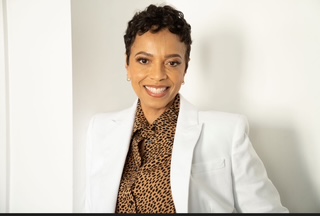
Author/CEO
Tricia has spent more than 25 years in senior leadership to include developing strategies, driving quality and performance improvement, executing operations, and mentoring & developing leaders.
She is the Chief Executive Officer and Founder of Aditus Partners Consulting Firm. Aditus Partners provides coaching and leadership training to align leadership, strategy, and operations that drive organizational excellence.
Prior to that, Tricia served as the Chief Operating Officer at a hospital in Los Angeles, CA. She provided executive oversight for operations, support departments, ancillary services, and contract services: to include Environmental, Food, Patient Transport, and Security Services.
Tricia earned her MBA from Texas Women’s University and her Masters in Health Administration from George Washington University. She is a Fellow at the American College of Healthcare Executives (FACHE) and a Certified Professional in Healthcare Quality (CPHQ).
She has served three years as Governing Board President for Women in Health Administration (WHA) of Southern California. She is also the author of A Lotus Legacy Memoir.


